Beginner’s Guide to Day Hiking: What to Pack and How to Prepare
A day hike is the least expensive adventure most of us can access. You need shoes, water, a few free hours, and a trailhead within driving distance. That low barrier is also why so many first hikes end early and badly — not dangerously, usually, just uncomfortably enough that the person never goes back. Wet socks at mile four. A wrong turn at dusk. A climb that turns out to be twice as long as the trail description suggested. None of that takes expensive gear to prevent. It takes a little planning and a pack built around the trail you are actually walking.
Pick the Trail Before You Pick the Gear
New hikers tend to choose trails by how scenic the photos look. A better filter is time and elevation gain. Distance on a map means very little if the route climbs steadily for two miles, because climbing slows you down far more than flat walking does.
A reasonable planning rule: figure on roughly two miles per hour on gentle terrain, and less once the grade steepens or the ground gets rocky. Then add an hour of buffer. A five-mile loop with 800 feet of climbing is a pleasant half day for a fit beginner and a four-hour grind for someone who hasn't walked that far in a year. Both are fine. Only one of them matches your afternoon.
Look at the elevation profile, not just the distance. Read the most recent trail reports for closures, blowdowns, or mud. Decide now whether it's an out-and-back or a loop, and check the sunset time for your date, then subtract two hours — that's your turnaround, whether or not you reached the viewpoint.
Layering, Explained Without Jargon
Your body heats up on the climb and cools down fast the moment you stop. That swing is why a single heavy jacket fails and three thin layers work.
The base layer sits against your skin and should move sweat away from it. Wool or a synthetic fabric does this. Cotton does the opposite: it soaks through, stays wet, and pulls heat out of you when you slow down. Leave the cotton t-shirt at home.
The mid layer traps warmth — a fleece, a light puffy, a flannel. The shell blocks wind and rain and can be as simple as a packable rain jacket. Start your hike slightly cool, because you'll warm up within ten minutes. Add the mid layer at rest stops and on ridgelines.
Even in summer, carry one extra insulating layer. Shade, wind, and a sudden afternoon shower change the temperature more than the forecast suggests. Wool or synthetic socks matter as much as anything else in your pack, and a spare pair in a zip bag has rescued more hikes than any gadget.
The Day Pack Checklist
This is a light version of the standard ten essentials, sized for a half or full day within reach of help.
- Water — around a liter per person for every couple of hours, more in heat or at altitude. A bottle plus a bladder works well.
- Food — bring more than you think you'll eat. Nuts, dried fruit, a sandwich, a couple of bars.
- Navigation — a paper map or a downloaded offline map, plus a small power bank. Phone batteries die faster in cold and in poor signal.
- Light — a headlamp or compact flashlight, even on a short hike. This is the item people skip and regret.
- First aid — blister plasters, tape, antiseptic wipes, any personal medication you know you can take.
- Sun protection — sunscreen, hat, sunglasses, lip balm.
- Extra layer and rain shell — packed, not worn, unless you need them.
- Small trash bag or dry sack — for your own wrappers and to keep anything valuable dry.
- Whistle — weighs almost nothing, carries much farther than your voice.
A day pack rarely needs to weigh much. If you can't comfortably lift it with one hand, take something out. Trekking poles are optional, but hikers with knee trouble often find them worth the extra weight on descents.
Safety Basics That Actually Matter
Most day-hike emergencies are boring ones: a twisted ankle, a wrong turn, an unplanned night out. A few habits cover nearly all of them.
Leave a plan. Tell someone the trail name, your route, your expected return time, and the make and plate of your car. Send a message when you're back. If you change plans mid-hike, that's fine — just be where you said you'd be, or be home on time.
Honor your turnaround time. The summit is not worth finishing in the dark. The trail will still be there next month.
Treat water you find outdoors. A clear mountain stream is not automatically safe to drink. Carry enough, or bring a filter or purification tablets and know how to use them.
If you get turned around, stop. Eat, drink, put on a layer, look at your map, and use the whistle. Wandering burns energy and makes you harder to find.
Give wildlife room. Store food smells, make noise on blind corners, and never approach or feed animals.
If you have a heart condition, asthma, joint problems, or you're new to sustained exercise, check with a doctor before tackling big elevation gain or hiking in serious heat. That's a conversation worth having before the trailhead, not after.
How to Walk All Day Without Wrecking Yourself
Start slower than feels natural
The first twenty minutes should feel almost too easy. You'll pass people who sprint off and stop for a long break a mile later. Steady beats fast.
Sip and snack on a schedule
Drink before you feel thirsty and eat something small every hour. Hunger and dehydration both show up as irritability and clumsy footing long before they show up as obvious symptoms.
Fix hot spots immediately
The moment a sock rubs, stop and deal with it. Thirty seconds of tape now saves you from three days of limping later. Loosen your laces on climbs to keep your toes from jamming the front of the boot, and tighten them for descents.
Your First Hike, Start to Finish
Choose a loop of three to five miles with modest climbing. Check the weather the morning of, not three days before. Pack the night before using the list above, and set the bag by the door so nothing gets forgotten in the rush. Leave your itinerary with someone. Start early enough that you have daylight to spare, begin cool, and turn around at the time you decided on.
Afterward, write two lines in your phone: what you used and what you never touched. That note becomes the most accurate packing list you'll ever own, and it will make the next hike lighter, easier, and more likely to happen again.
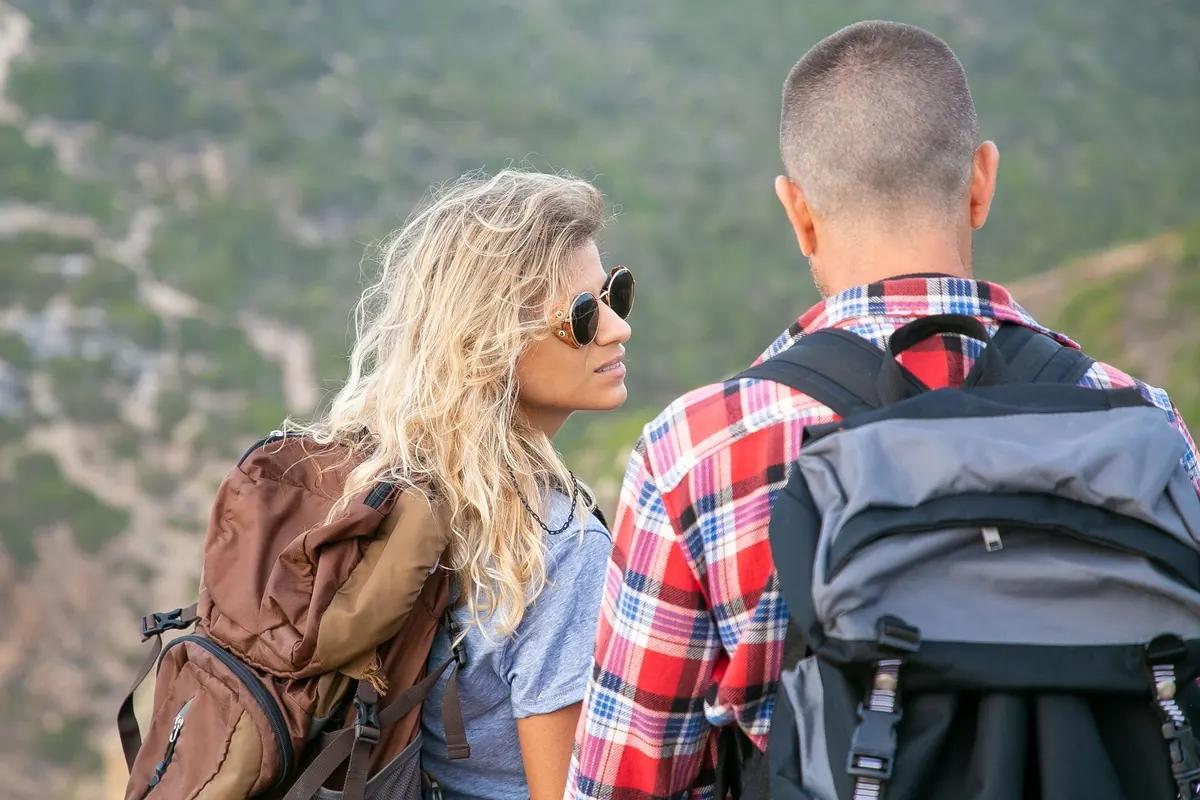
Photo: Kampus Production / Pexels

You Might Also Like
Late-summer wildflowers peak in wet meadows, rail trails and utility corridors near home. Here's how to find them, time your visit and walk them well.
A practical guide to the fit, color, fabric, and detail choices that make outfits look flat and tired — plus quick fixes you can do today.